

Calculus Cases: the series finale
Ten seconds of the ending of ZENO, the year’s most watched show, appear on a fan forum before dawn. The platform postpones the premiere and the studio discovers that someone tampered with the official trailer project that night. The Chief Inspector, a role played by the teacher, gathers the unit: the show’s visual effects are built from sequences and series, and those series have left traces. A geometric ratio identifies the copy of the video, an arithmetic sum dates the render, a telescoping sum reveals a deleted session and the exponent of a p-series gives away which version of the effects bible was used by whoever remade the shots.
The case follows the format of every Calculus Case: it is launched at the end of a class, worked on at home and closed in the next class.
- Launch, at the end of a class (15–20 min). You project the presentation: the leak, the show and its episodes, and the creative team. Each group receives the dossier of one episode and five students receive, in a sealed envelope, the card of a suspect: the creator, the head writer, the writer of the finale, the mathematics adviser and the trailer editor.
- At home (45–60 min). Each group analyses its episode’s forensic exhibit, solves the exercises and chooses the values of its trailer shot. The suspects prepare their role.
- Closing class (60 min). Pooling in the editing room: each group states its finding and enters its shot, and the class watches its trailer. Then the envelope with the building’s records is opened, the suspects are questioned in three rounds and each group presents its accusation. The solution is unique and cannot be reached without the mathematics.
Materials generator
The configurator guides you in four steps. All it really needs is the number of students: from it, the website forms the groups, decides which episodes are worked on and counts how many copies to print. Everything else already has a recommended value.
Activity documents
Start with the printing and distribution guide: it says what to print, how, how many copies and when each document is handed out. The teacher packet holds the solution and must not circulate. In each tab, the red row downloads a ZIP with all its content; the icons let you view or download each file.
Activity packages
The configuration travels in a JSON file that can be saved and imported later. The student package contains nothing confidential and opens the editing room with this class's groups. The envelope is the closing class's. The teacher package contains the solution and the private cards.
What each episode studies
| Episode | Mathematics | Forensic exhibit | What it proves |
|---|---|---|---|
| 1 · Countdown | A sequence with a limit; an arithmetic progression and its sum | Render log: only the finish time is known | The start time, if the progression of costs is added up (assuming equal costs points to an innocent person) |
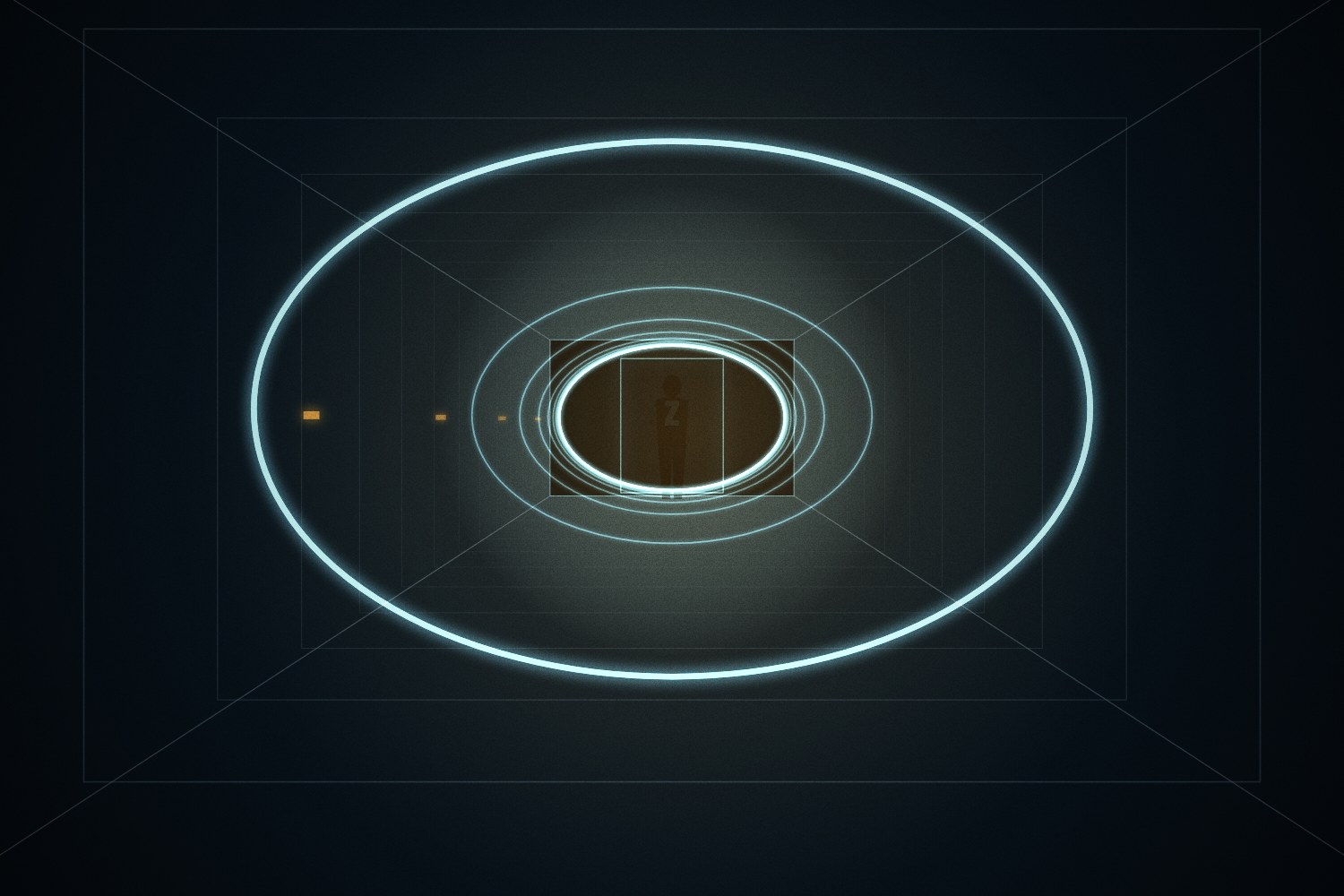
| 2 · Achilles | Geometric series, (\sum ar^{k-1} = a/(1-r)) when (\lvert r\rvert<1) | Leaked frame with the echo rings | The ratio identifies the copy and confirms the video is genuine |
| 3 · The Rope | Harmonic series: terms tending to 0 and an unbounded sum | The creator’s statement to the press | That she lied: the probe does arrive |
| 4 · The Erased Log | Telescoping series | The project’s session journal | That a session is missing, how long it lasted and when it started |
| 5 · Dose | (p)-series: convergence, bounds without integrals, convergent is not small | Dosimeter readings in the alternative cut | The exponent reveals which version of the bible the tamperer had |
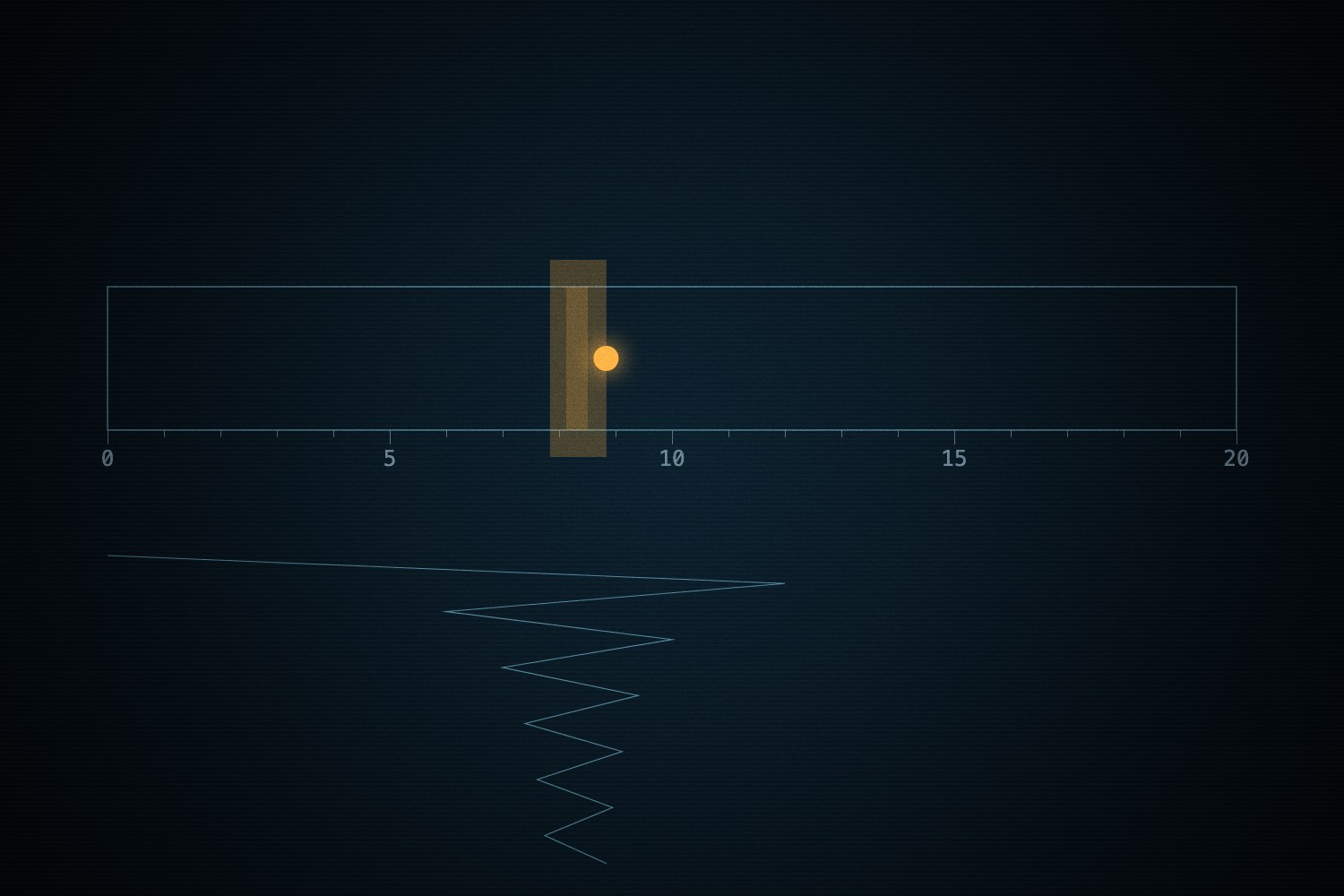
| 6 · Pendulum | Alternating series; absolute and conditional convergence | Beacon positions in the alternative cut | That the shot uses the old corridor, not the one that was built |
A table of partial sums suggests, but does not prove: a hundred terms of the harmonic series do not say that it diverges, and a hundred terms of (\sum 1/n^2) do not say that its sum stays below 2. That is why each dossier asks for an argument (comparison, grouping, telescoping or the alternating series test), and the editing room’s lab always distinguishes exact values, proved bounds and numerical computations.
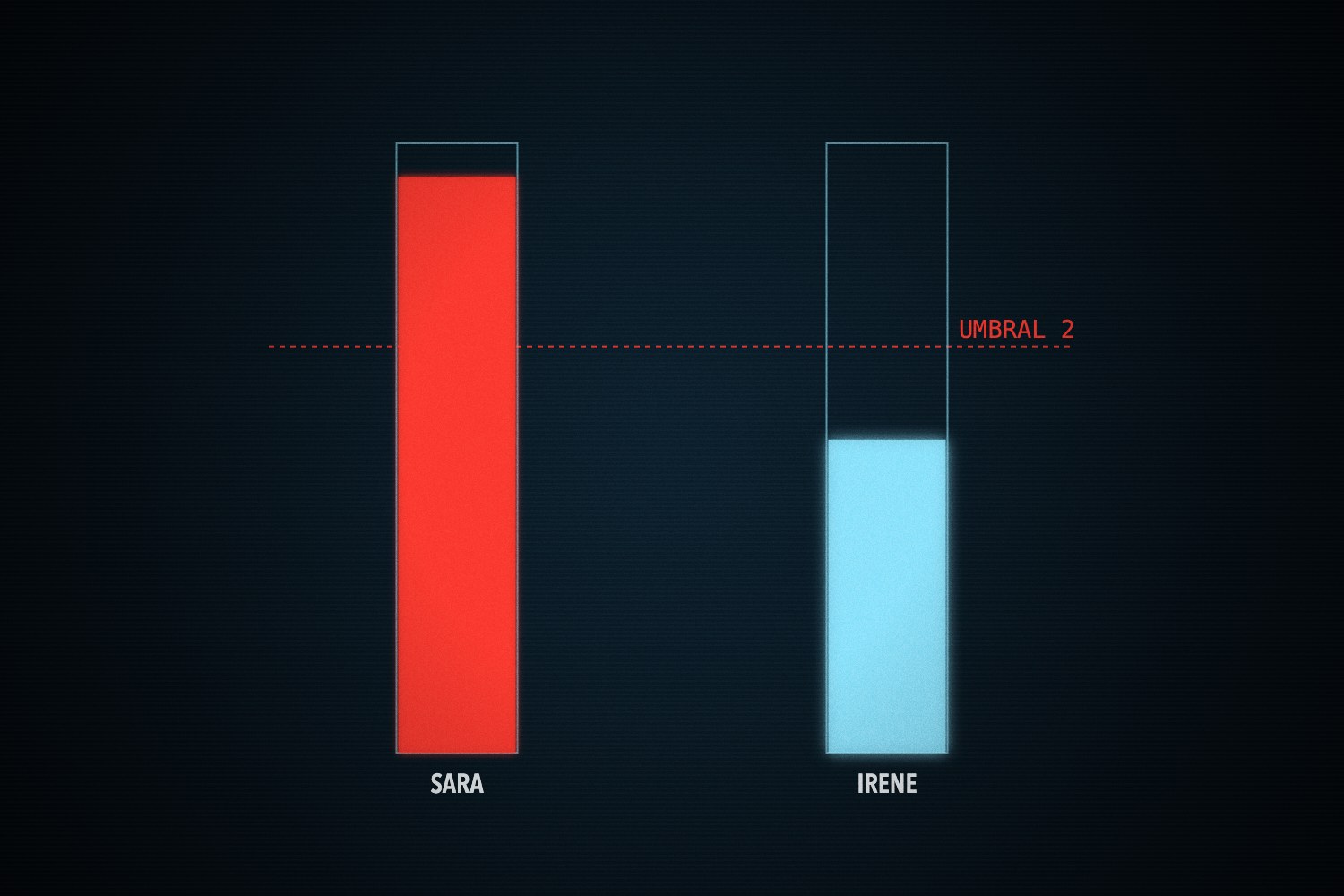
The series ZENO, its studio, its platform, the people and the records are fictional and purely educational. The stills and the banner are programmatically generated previews, not images from a real production.